
Specialized Seminar: "Universal Indirect Polyexciton Bound States in Electron-Hole Bilayers" by Hans-Werner Hammer (TU Darmstadt)
Join us for a QUBITS Specialized Seminar with Hans-Werner Hammer, Professor of Theoretical Physics at TU Darmstadt, exploring how effective field theories reveal universal phenomena in quantum systems across nuclear, particle, and atomic physics.
Info about event
Time
Location
Aarhus University, room Aud G1 (1532-116)
Organizer
QUBITS specialised seminar format
Coffee and cake will be served from 14:00. The seminar begins at 14:15 with a 45-minute talk, followed by questions and discussion.
Registration is not required. However, if you would like to receive future QUBITS Seminar invitations directly by email, please sign up here.
About the talk
In this talk, we present recent theoretical insights into the properties
of universal indirect polyexciton bound states. While the binding of two
excitons into a biexciton is well established, the behavior of these
composite quasiparticles changes distinctively in restricted geometries.
In two-dimensional electron-hole bilayers, indirect biexcitons are known
to unbind above a critical interlayer separation $d=d_c$. Just below this
threshold, the biexciton becomes a universal, exponentially shallow
two-dimensional halo state. This weakly bound regime implies the emergence of
universal polyexciton states. Using a variety of theoretical methods, we
map out the spectrum and structural properties of these universal polyexcitons.
In particular, we demonstrate that polyexciton bound states can only exist up
to a critical exciton number, $N_c\sim 1/(d_c-d)$, and satisfy distinct
geometric scaling relations.
About the speaker
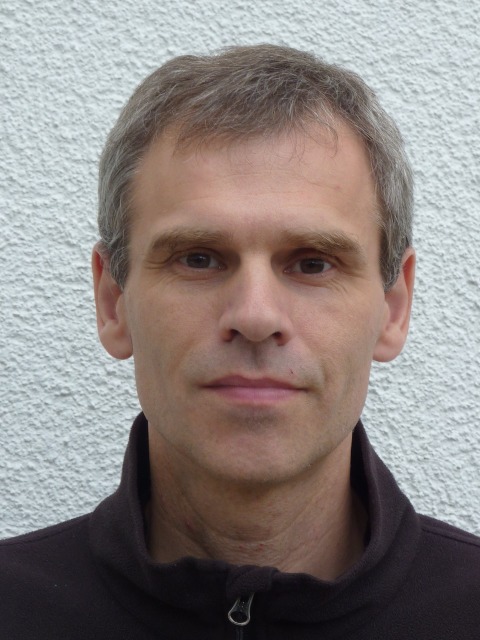
Professor Hans-Werner Hammer is a theoretical physicist at Technical University Darmstadt working at the intersection of nuclear, particle and atomic physics.
A central theme of his research is the search for universal principles that connect quantum systems across vastly different energy and length scales. He is internationally recognized for his work on effective field theories and few-body physics, providing powerful theoretical tools for understanding complex quantum systems – from atomic nuclei to ultracold atoms.
STAY UPDATED!
Don’t miss out on upcoming QUBITS Seminars and other news from Quantum Campus Aarhus. Sign up for updates via our mailing list here:
👉 https://projects.au.dk/quantum/sign-up
You can unsubscribe at any time.
👉 Follow Quantum Campus Aarhus on LinkedIn for news, events, and community highlights: Quantum Campus Aarhus LinkedIn