We are excited to feature nearly 30 posters at this year’s QCA Annual Meeting — with contributions from across NAT, TECH, HEALTH, and BSS at Aarhus University.
The posters reflect the vibrant and interdisciplinary nature of the quantum community at AU, and will be on display throughout the event in the iNANO Foyer.
Below is the list of poster titles. Click on a title to view the full abstract along with the presenter's name and affiliation.
Please note that the list is still being updated, and more posters will be added shortly.
By Laura Berg (Master's student) and Maarten Goesten (Assistant Professor), Dept. of Chemistry, Aarhus University
In quantum molecular tectonics, materials with targeted quantum functionalities are designed through a judicious choice of molecular builing blocks. Metal-Organic Frameworks (MOFs) most suit this approach, and a class of semimetallic MOF Kagome lattices based on redox-active ligands has recently been attracting attention. The Wyckoff positions corresponding to the hexagonal Kagome lattice and the corresponding MOF structure based on hexaiminobenzene (HIB) are shown directly below.
In recent work (Goesten & Schoop, JACS, 2024, 146, 29599−29608), we described the presence of an electride, s-orbital like ‘pore band’ in these MOFs, which carry general stoichiometry M3(HIB)2, where M=Ni,Cu,Co,Fe,Mn. The pore band corresponds to an electron in the center of the pore, at the totally symmetric Wyckoff 1a position. We analyze this special band in deeper detail here, and reveal the presence of higher angular-momentum orbitals, with p and d type symmetry. The figure to the right shows the computed pore orbitals, in the Brillouin Zone center, for Ni3(HIB)2. Apart from Ni3(HIB)2, all synthesized MOFs based on HIB are magnetic. Their band structures, with varying degrees of spin polarization for the pore electron, are shown in the center. Totally symmetric, s-like pore states, are drawn in thicker colors.
By John Julius Flounders, Nanoscience Master's student at Quantum Materials Group, iNANO, Dept. of Physics & Astronomy, Aarhus University
With the advent of quantum computing, a need for new substrates that ideally are CMOS compatible has arisen [1]. One of these substrates which can host quantum devices are δ-layers which consist of an ultra-dense ultra-thin- dopant layer encapsulated in a silicon host matrix. This doping produces a shallow, directional and highly conductive 2-dimensional electron gas (2DEG) whose occupied states lie just below the Fermi surface in so called Γ-states [1,2]. We fabricate Si:Sb δ-layers by means of molecular beam epitaxy. We then investigate the physical structure using low energy electron diffraction, the chemical structure using x-ray photoemission spectroscopy and the electronic structure of Si:Sb δ-layers using angle resolved photoemission spectroscopy.
Through our fabrication method enough confinement is achieved to occupy the lowest conduction band states (Γ-states). We find that the conduction band lies in the k∥-plane and is nearly parabolic and slightly anisotropic. This band structure allows electrons to move with high directionality due to the confinement of the Γ-state [3]. The electronic structure found in Si:Sb δ-layers closely resembles the one seen in the well-known Si:P δ-layers [2]. However, using antimony is non-toxic, cheaper, and compatible with industrial pattern techniques and can therefore act through its CMOS compatibility as an easy to use and more convenient substrate for quantum devices [3].
[1] Fuechsle, M.; Miwa, J. A.; Mahapatra, S.; Ryu, H.; Lee, S.; Warschkow, O.; Hollenberg, L. C. L.; Klimeck, G.; Simmons, M. Y. A single-atom transistor. Nat. Nanotechnol. 2012, 7, 242– 246, DOI: 10.1038/nnano.2012.21
[2] Miwa, J. A.; Hofmann, P.; Simmons, M. Y.; Wells, J. W. Direct Measurement of the Band Structure of a Buried Two-Dimensional Electron Gas. Phys. Rev. Lett. 2013, 110, 136801, DOI: 10.1103/PhysRevLett.110.136801
[3] Strand, F. S.; Cooil, S. P.; Campbell, Q. T.; Flounders, J. J.; Røst, H. I.; Åsland, A. C.; Skarpeid, A. J.; Stalsberg, M. P.; Hu, J.; Bakkelund, J.; Bjelland, V.; Preobrajenski, A. B.; Li, Z.; Bianchi, M.; Miwa, J. A.; Wells J. W. Direct Observation of 2DEG States in Shallow Si:Sb δ-Layers The Journal of Physical Chemistry C 2025 129 (2), 1339-1347, DOI: 10.1021/acs.jpcc.4c07331
By Hem Raj Khanal, Master's student, Dept. of Physics & Astronomy, Aarhus University
This research explores whether quantum algorithms can efficiently model complex probability distributions. We focus on copulas—mathematical functions that describe how multiple variables depend on each other and are widely used in fields such as finance. To investigate this, we design a quantum circuit that represents a copula, which is then trained to learn and generate data in copula space.
Our results show that a copula can be modeled as a unitary operator rather than as a quantum state. This approach reduces the number of qubits compared to the existing approaches, lowering computational complexity. Our findings point toward a promising direction for scalable quantum algorithms capable of modeling high-dimensional dependencies that are difficult to capture with classical methods.
By Adam Husted Kjelstrøm, PhD student, Dept. of Computer Science, Aarhus University
As quantum computing resources remain scarce and error rates high, minimizing the resource consumption of quantum circuits is essential for achieving practical quantum advantage. Here we consider the natural problem of, given a circuit C, computing an equivalent circuit C′ that minimizes a quantum resource type, expressed as the count or depth of (i) arbitrary gates, or (ii) non-Clifford gates, or (iii) superposition gates, or (iv) entanglement gates. We show that, when C is expressed over any gate set that can implement the H and TOF gates exactly, each of the above optimization problems is hard for co-NQP, and hence outside the Polynomial Hierarchy, unless the Polynomial Hierarchy collapses. Gatesets which can implement H and TOF exactly are ubiquitous, with popular hardware platforms such as those from IBM, IonQ, and Quantinuum all falling into this category. As co-NQP-hard problems are expected to be infeasible even for quantum computers, this suggests heuristic or approximate approaches are likely necessary.
By Emre Aslan, Research Assistant, Dept. of Physics & Astronomy, Aarhus University
The Quantum Teaching Lab (QTLab) at the Department of Physics and Astronomy (IFA), Aarhus University, offers an interactive environment for learning and experimenting with quantum science and technology. The lab consists of two main facilities: the Photonics Lab and the Atomic Lab.
Together, these laboratories bridge theoretical concepts and experimental practice, giving students a solid foundation in modern quantum technologies. The QTLab supports both undergraduate and graduate education, preparing students for advanced research in quantum physics and emerging quantum applications.
By Trishala Mitra & Mikkel Kirkegaard, PhD Students, Dept. of Physics & Astronomy, Aarhus University
The Optomechanics group at the Department of Physics and Astronomy investigates silicon nitride-based nanomechanical resonators for various applications ranging from quantum technologies to atmospheric science.
By Jesper Hinke Kirkegaard, Master's Student, Dept. of Physics & Astronomy, Aarhus University
Frequency noise is a critical parameter for evaluating the stability and spectral purity of narrow-linewidth laser sources, which are essential for emerging quantum technologies such as quantum communication, quantum computing, precision metrology, and coherent sensing. However, conventional frequency noise measurement techniques remain costly and complex, limiting their accessibility for scalable quantum system development. This work presents a compact and cost-effective approach for characterizing the frequency noise spectrum of narrow-linewidth lasers using a self-homodyne coherent receiver combined with digital cross-correlation.
By extracting uncorrelated accumulated phase noise from orthogonal polarization states, the method achieves high sensitivity to frequency fluctuations over both slow and fast time scales. Experimental results show strong agreement with a commercial frequency noise analyzer, validating the accuracy and reliability of the technique. This accessible, digitally enhanced approach offers a powerful diagnostic tool for stabilizing and qualifying laser sources in advanced quantum communication and precision measurement systems.
By Mads Krogh Bänsch, Master's Student, Dept. of Physics & Astronomy, Aarhus University
Squeezed states of light, characterized by a quadrature with noise below the quantum limit, are of interest in many quantum optical applications, most notably gravitational-wave detection [1]. This poster presents a study of the feasibility of detecting squeezed states generated in an InGaP waveguide, based on Monte Carlo simulations of various homodyne detection configurations. Simulations show that the fiber-coupled coherent receiver available in our photonics lab (NeoPhotonics μICR - Class 40) is unsuitable for measuring squeezing, as optical losses in the receiver and fiber interfaces reduce the observable nonclassical noise suppression to negligible levels. Alternative schemes employing free-space coupling were also investigated and appear more promising due to lower coupling losses. Future work will extend these simulations and focus on the experimental realization of such low-loss detection setups, along with more detailed modeling of squeezed light generation in the InGaP waveguide.
References
[1] J. Aasi et al. “Enhanced sensitivity of the LIGO gravitational wave detector by using squeezed states of light”. In: Nature Photonics 7.8 (Aug. 2013), pp. 613–619. doi: 10.1038/nphoton.2013.177. url: https://doi.org/ 10.1038/nphoton.2013.177.
By Frode Balling-Ansø, Jeppe Lykke Krogh, Ella Elisabeth Lassen, and Anne E. B. Nielsen, Dept. of Physics & Astronomy, Aarhus University
In contrast to the usual bulk-boundary correspondence, topological states localized within the bulk of the system have been numerically identified in quasicrystalline structures, termed bulk localized transport (BLT) states. These states exhibit properties different from edge states, one example being that the number of BLT states scales with system size, while the number of edge states scales with system perimeter. Here, we define a procedure to identify BLT states, which is based on the physically motivated crosshair marker and robustness analyses.
Applying the procedure to the Hofstadter model on the Ammann-Beenker tiling, we find that the BLT states appear mainly for magnetic fluxes within a specific interval. While edge states appear at low densities of states, we find that BLT states can appear at many different densities of states. Many of the BLT states are found to have real-space localization that follows geometric patterns characteristic of the given quasicrystal.
By Laura Pedersen (PhD student), Lars Olsen & Ove Christiansen, Dept. of Chemistry, Aarhus University
The molecular vibrational partition function describes how a molecule's internal vibrational quantum states are populated at a given temperature. It serves as the foundation for understanding the contribution of the vibrational degrees of freedom to a molecule’s thermodynamic properties, such as Gibbs free energies and entropy. These properties are essential in predictions of molecular stability and dynamics, such as how proteins bind to small molecules like drugs. However, accurate calculation of the vibrational partition function becomes challenging when the size of a molecular system increases.
This project focuses on developing theory for accurate and efHicient quantum computations of molecular vibrational partition functions. It encounters the computational challenge by using twin-space thermoHield theory to transform quantum statistical mechanics with density operators into an effective wave function theory in a double Hilbert space. The aim is to formulate this theory using a many-mode second quantization formalism and to subsequently utilize its mapping onto a qubit-based representation, enabling application on quantum computers in the long term.
By Adrianna Saribekyan, Master's student), Dept. of Physics & Astronomy, Aarhus University
Integrated nonlinear photonics provides a compact route to generate non-classical light on a chip. This work focuses on the characterization of InGaP-on-insulator waveguides for spontaneous parametric down-conversion (SPDC) at telecom wavelengths. The study builds on preliminary investigations of second-harmonic generation (SHG), including power calibration, cutback measurements, and identification of phase-matched waveguides for a fixed 775 nm pump source.
The next step is to explore the onset of SPDC and investigate how the length of the nonlinear interaction region affects conversion efficiency. These measurements will help assess the potential of InGaP-on-insulator as an efficient χ(2) platform for integrated quantum light generation and contribute to the broader development of compact, scalable photonic quantum technologies.
By Brayan Elian Castiblanco Ortigoza1,2,3 (Master's student) and M. Fleischhauer2
1Dept. of Physics & Astronomy (Aarhus University),
2Department of Physics and Research Center OPTIMAS (University of Kaiserslautern-Landau)
3Laboratoire Interdisciplinaire Carnot de Bourgogne, CNRS UMR 6303, Université Bourgogne Europe
Simulations on nonlinear bosonic topological transport in Rice–Mele optical lattices are presented, computing Chern number from Zak phases of time-evolved ground states over full pump cycles to predict quantized displacement per cycle. The approach is based on soliton solutions to the Hubber model for the Thouless pump [1]. These results delineate transport/no-transport regimes versus drive frequency and interaction strength, identifying an adiabatic window with integer pumping (C ≈ 1) and degradation under stronger nonlinearity or nonadiabatic drive, in line with recent observations of nonlinear and fractional Thouless pumping of solitons [2, 3]. Framed for quantum technology, we translate design knobs into device-level metrics and emphasize two representative applications: (i) reliable qubit/state transfer via dimerized topological chains [4]; and (ii) topologically protected memory based on surface-code architectures, from foundational proposals to recent system-level demonstrations of improving logical lifetimes with increasing code size [5].
[1] D. J. Thouless, “Quantization of particle transport,” Phys. Rev. B 27, 6083–6087 (1983). doi:10.1103/PhysRevB.27.6083.
[2] M. JÅNurgensen, S. Mukherjee, and M. C. Rechtsman, “Quantized nonlinear Thouless pumping,” Nature 596, 63–67 (2021). doi:10.1038/s41586-021-03688-9.
[3] M. JÅNurgensen, S. Mukherjee, C. JÅNorg, et al. “Quantized fractional Thouless pumping of solitons,” Nature Physics 19, 420–426 (2023). doi:10.1038/s41567-022-01871-x.
[4] F. M. D’Angelis, F. A. Pinheiro, D. GuÅLery-Odelin, S. Longhi, and F. Impens, “Fast and robust quantum state transfer in a topological Su–Schrieffer–Heeger chain with next-to-nearest-neighbor interactions,” Phys. Rev. Research 2, 033475 (2020). doi:10.1103/PhysRevResearch.2.033475.
[5] E. Dennis, A. Kitaev, A. Landahl, and J. Preskill, “Topological quantum memory,” J. Math. Phys. 43, 4452–4505 (2002). doi:10.1063/1.1499754.
By August Lykke-Møller, PhD student, Dept. of Chemistry, Aarhus University
Gaussian Process Regression (GPR) is a non-parametric Bayesian machinelearning method widely used in quantum chemistry, particularly for constructing Potential Energy Surfaces (PES). Its flexibility, accuracy and built-in uncertainty estimates make it attractive for scientific modelling. However, the cubic computational scaling with the number of training points renders exact GPR impractical for datasets larger than a few thousand samples. Two main strategies exist to address this limitation. Approximate approaches such as sparse GPR offer favourable scaling but at the cost of reduced accuracy. Alternatively, structured methods exploit algebraic structure in covariance matrices to reduce the computational cost while remaining exact. An example of this is grid GPR, which leverages the fact that for certain kernel functions, the covariance matrix of a complete Cartesian grid can be represented as a Kronecker product. This enables near-linear scaling but requires a fully populated Cartesian grid, severely limiting the cases where it can be applied.
This limitation motivates the development of more flexible formulations. We introduce sub-grid GPR, a novel variant inspired by the N-mode expansion used in PES construction. By employing mode-combination logic and tensor-contraction operations, sub-grid GPR relaxes the requirement of a complete Cartesian grid. The method only requires completeness within mode combinations relevant to the training data. Like grid GPR, it remains exact while exhibiting near-linear computational scaling. This approach preserves the accuracy and uncertainty quantification of exact GPR and substantially broadens its applicability.
By Maximilian Baron (PhD student), Keene Schlomer, Adam Chatterley, Lennard Rahn, and Michael Drewsen , Dept. of Physics & Astronomy, Aarhus University
A qubit coherence time much longer than the duration of individual gate operations is a prerequisite for realizing quantum computing. Ion-based qubits are promising candidates in this regard, as they can exhibit long lifetimes – for example optical qubits in the metastable 52D5/2 level of Barium with a 30s lifetime compared to gate times of a few microseconds. In practice, however, noise on the addressing lasers and magnetic field strength significantly limits coherence times. To mitigate these effects, dynamical decoupling schemes have been developed.
Here, we present the implementation of a continuous dynamical decoupling scheme on an optical-frequency qubit in 138Ba+, extending the number of coherent Rabi oscillations in our experiments by nearly three orders of magnitude from tens to 10 000. The controllable noise frequency sensitivity of this scheme also opens possibilities for sensing applications. Furthermore, recent proposals and realizations in other systems of combinations of such noise decoupling schemes with entangling gate operations [1] show a promising path forward.
[1] Nünnerich, M. et al. (2025). PRX, 15(2), 021079.
By Achmet Tachsin, Master's student, Dept. of Electrical & Computer Engineering, Aarhus University
Spontaneous parametric down-conversion (SPDC) sources are essential for quantum technologies but challenging to optimize due to complex, high-dimensional parameter spaces with competing objectives. We apply multi-objective genetic algorithms to systematically optimize SPDC sources across bulk crystal, waveguide, and integrated configurations, encoding design parameters as genetic chromosomes and evolving populations toward Pareto-optimal solutions. Results demonstrate that genetic algorithms consistently identify superior designs compared to conventional approaches, discovering non-intuitive parameter combinations and revealing fundamental trade-offs between brightness, purity, and heralding efficiency. This work establishes a paradigm shift from intuition-based to data-driven computational discovery in quantum photonics source engineering.
Keywords: SPDC, genetic algorithms, quantum optics, multi-objective optimization, photon pairs
By Peter Juhasz, PhD student, Dept. of Mathematics, Aarhus University
We introduce a dynamic random hypergraph model constructed from a bipartite graph. In this model, both vertex sets of the bipartite graph are generated by marked Poisson point processes. Vertices of both vertex sets are equipped with marks representing their weight that influence their connection radii. Additionally, we also assign the vertices of the first vertex set a birth-death process with exponential lifetimes and the vertices of the second vertex set a time instant representing the occurrence of the corresponding vertices.
Connections between vertices are established based on the marks and the birth-death processes, leading to a weighted dynamic hypergraph model featuring powerlaw degree distributions. We analyze the edge-count process in the challenging case of the heavy-tailed regime with infinite variance, we prove convergence to a novel stable process that is not LÅLevy and not even Markov.
By Christian Frydendahl *,1 (Postdoc), Torgom Yezekyan2, Vladimir Zenin2, Sergey I. Bozhevolnyi2
1Department of Physics and Astronomy, Aarhus University
2University of Southern Denmark, Centre for Nanooptics
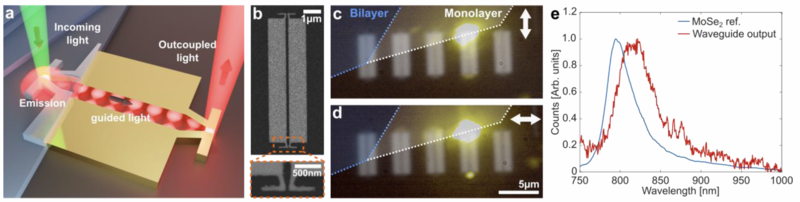
Efficient optical connection between integrated optics and the outside world remains one of the biggest challenges for widespread commercialization and adoption of photonic integrated circuits (PICs)1. To inject light into integrated nanophotonic waveguides, it must be coupled from the outside with a lensed fiber or microscope objective, limiting the scalability and promise of optical chips. Making direct, on-chip, light sources that directly inject radiation into the waveguide circuitry would circumvent the problem of external connection, making a crucial step towards delivering on numerous promises of future PICs, e.g., faster and greener (i.e., more energy efficient) data processing and communications, artificial neural networks, diagnostic lab-on-chip systems, and new chip-scale quantum technologies1.
We demonstrate here the efficient coupling and guiding of photoluminescence from TMDC monolayers of MoSe2 into gold plasmonic slot waveguides. Optical emission from the 2D material is stimulated by far-field optical pumping with a 620 nm laser, part of this emission is then coupled directly to the waveguide’s fundamental mode, where it propagates and is emitted by the outcoupling plasmonic antenna, Fig.1a and b. By attaching a plasmonic antenna coupler that is resonant with the emission wavelength range of MoSe2, we make use of the Purcell effect to enhance the optical emission to the plasmonic slot waveguide's fundamental mode. We confirm this coupling to the fundamental mode via polarization (Fig.1c and d) and spectrally (Fig.1e) sensitive measurements. Our results highlight the mutual compatibility between plasmonic waveguide systems and 2D semiconductors, indicating a promising future direction for fully independent PIC systems based on 2D material light-sources and plasmonic waveguides.
References:
[1]: Frydendahl, C., Yezekyan, T., Zenin, V. A., & Bozhevolnyi, S. I. (2025). 2D Semiconductors as On-Chip Light Sources for Integrated Nanophotonics. Nano Letters, 25(16), 6414-6420.
By Sarang Dalal & Lars H. Pedersen, Professors, Dept. of Clinical Medicine, Aarhus University
Optically pumped magnetometers are quantum sensors that have applications in various fields that require the measurement of the femtoTesla-scale magnetic fluctuations. They are rapidly becoming popular as the sensor technology used in magnetoencephalography (MEG) systems, used for measuring human brain activity. MEG is usually measured in adults and occasionally in chidlren, but we endeavored to measure human brain signals even earlier.
We therefore placed 16 OPMs over the abdomen during the third trimester of pregnancy to measure fetal brain activity. The measurements were made while the mother relaxed on her side on an MEG-compatible bed in a magnetically shielded room. 1200 red light flashes of 2 ms duration were projected onto the abdomen to elicit fetal brain responses. Both maternal and fetal cardiac signals were clearly evident in the raw data. The data were then averaged across trials and processed with independent components analysis (ICA) to remove cardiac interference and other artifacts. This revealed a fetal brain response peaking between 190 and 240 ms, consistent with literature showing SQUID-based fetal measurements. To our knowledge, these are the first OPM measurements of the fetal visual response.
By Irfansha Shaik (Postdoc)1,2 & Jaco van de Pol1, Dept. of Computer Science1, Aarhus University & Kvantify2
Clifford circuit optimization is an important step in the quantum compilation pipeline. Major compilers employ heuristic approaches. While they are fast, their results are often suboptimal. Minimization of noisy gates, like 2-qubit CNOT gates, is crucial for practical computing. Exact approaches have been proposed to fill the gap left by heuristic approaches. Among these are SAT based approaches that optimize gate count or depth, but they suffer from scalability issues. Further, they do not guarantee optimality on more important metrics like CNOT count or CNOT depth. A recent work proposed an exhaustive search only on Clifford circuits in a certain normal form to guarantee CNOT count optimality. But an exhaustive approach cannot scale beyond 6 qubits.
In this paper, we incorporate search restricted to Clifford normal forms in a SAT encoding to guarantee CNOT count optimality. By allowing parallel plans, we propose a second SAT encoding that optimizes CNOT depth. By taking advantage of flexibility in SAT based approaches, we also handle connectivity restrictions in hardware platforms, and allow for qubit relabeling. We have implemented the above encodings and variations in our open source tool Q-Synth. In experiments, our encodings significantly outperform existing SAT approaches on random Clifford circuits. We consider practical VQE and Feynman benchmarks to compare with TKET and Qiskit compilers. In all-to-all connectivity, we observe reductions up to 32.1% in CNOT count and 48.1% in CNOT depth. Overall, we observe better results than TKET in the CNOT count and depth. We also experiment with connectivity restrictions of major quantum platforms. Compared to Qiskit, we observe up to 30.3% CNOT count and 35.9% CNOT depth further reduction.
By Thomas S. Nielsen, PhD Student, Dept. of Physics & Astronomy, Aarhus University
Increased scientific interest in quantum materials, including 2D materials, heterostructures, and operational devices incorporating them, necessitates measurement techniques capable of isolating clear electronic structure signals from such small and complex systems. Here, we present our new spatially-resolved ARPES beamline at the ASTRID2 synchrotron, where a <3 µm beam spot is produced using an achromatic, elliptical capillary optic. We describe the layout of this beamline and the innovations necessary to precisely utilize small beam for ARPES measurements. We demonstrate the capability of this beamline using nanoARPES measurements on several example systems and discuss in detail the performance of the capillary optic.
By Ihsan Ahmed Kolasseri, PhD student, Dept. of Clinical Medicine, Aarhus University
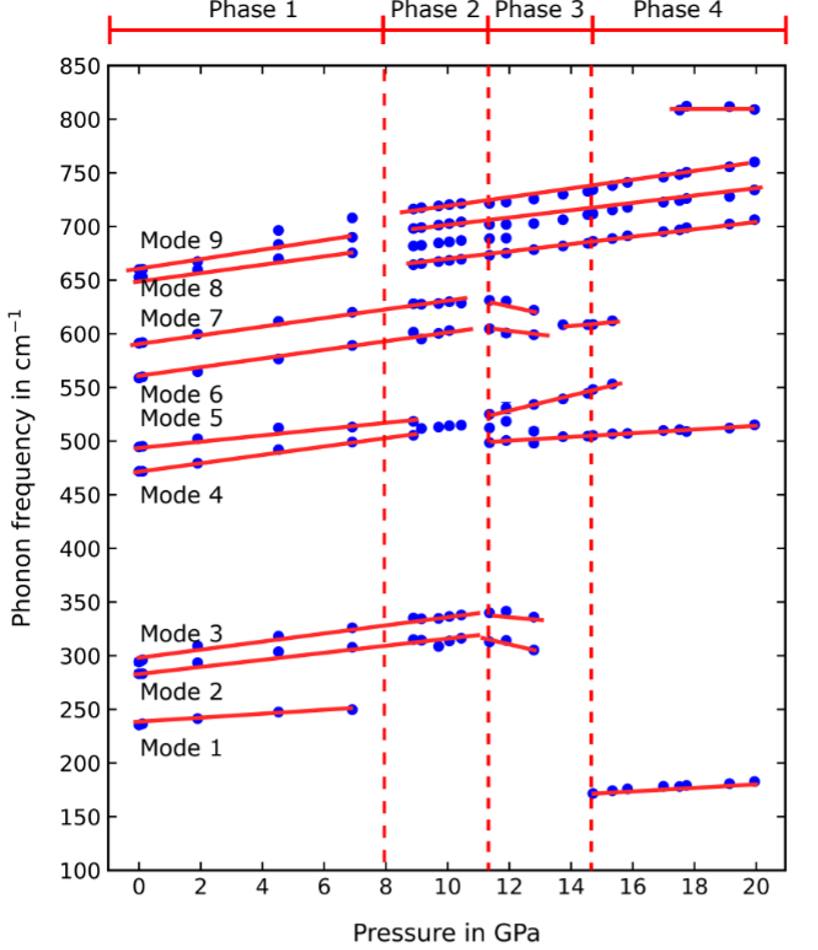
Quantum spin liquids (QSL) are materials that might have data storage applications in quantum computing. Conflicting neighbor spin interactions of antiferromagnetically coupled magnetic atoms on triangle-based geometries can lead to QSL phase.. Na2Co2TeO6 (NCTO) is a QSL candidate material. The layered structure of NCTO has triangular plane lattices. The hexagonal phase of NCTO has an antiferromagnetic (AFM) ordering at 27 K with two spin reorientation transitions. When a magnetic field around 7T is applied, the magnetic ordering of the material is suppressed and a potential QSL state is induced because of its structure. Understanding and discovering different structural phases of these classes of materials is crucial to achieve QSL states. In this study we applied pressure upto 20 GPa and observed significant changes in the Raman peak profile indicating a first order phase transition. High pressure single crystal X-ray diffraction data to support this claim has been collected and is shown here, but the new phase of the material is not revealed yet (ongoing analysis).
By Dominic Hache, Master's student, Dept. of Physics & Astronomy, Aarhus University
Rising power demands from artificial intelligence and other technologies pose significant challenges for the future, requiring either increased energy generation or more efficient electronic devices. Valleytronics offers a promising approach for improving computational efficiency by exploiting the valley degree of freedom found in transition metal dichalcogenides (TMDs). In these materials, Breaking of spatial inversion symmetry creates inequivalent K-points, giving rise to optical selection rules and a valley Hall effect that can be used for information storage and processing beyond conventional electron charge-based methods.
In this study, we investigate the TMD Fe₀.₂₅WSe₂, which may introduce access to high-symmetry M-points rather than the K-points. While WSe₂ has been extensively studied in valleytronics with respect to K-points, doping with iron may introduce ferromagnetic order thus breaking time-reversal symmetry at the M-points, providing a novel platform for valleytronic applications. Angle-resolved photoemission spectroscopy (ARPES) measurements show a significant splitting of the M bands in Fe-doped WSe₂ compared to undoped WSe₂, suggesting that M-points may serve as an alternative degree of freedom for future valleytronic devices.
By Rohit Yadav1,2,* (Postdoc), Sandra Benter3, and Rainer Timm1,2
1Division of Synchrotron Radiation Research, Lund University
2NanoLund, Lund University
3ESRF - European Synchrotron Radiation Facility
*Present affiliation: The Novo Nordisk Foundation Quantum Computing Programme (NQCP), Niels Bohr Institute, University of Copenhagen
Low-dimensional topological states have transformed our understanding of charge transportation through quantum materials. Many relevant observations have been connected to bismuth (Bi) containing materials or ultrathin Bi films. Here, we studied sub-monolayer amounts of Bi deposition on the In-terminated InSb(111)A surface using various complementary surface science techniques. Bi deposition at elevated sample temperature results in well-ordered surface reconstructions of (2 Å~ 2) and (2√3 Å~ 2√3)−R300. Scanning tunneling microscopy/spectroscopy (STM/S) data show an enhanced density of states at the interface of the two reconstructions and local Bi trimers over the (2 Å~ 2) reconstructed surface.
Bi-induced metallic surface states crossing the Fermi level are observed and attributed exclusively to the localized trimer states through STS and angle-resolved photoemission spectroscopy (ARPES) results. Furthermore, the ARPES spectra show band splitting at the Γ point and degenerate surface states at the M point, which is associated with Rashba splitting due to strong Bi-substrate interaction. Thus we interpret the Bi/InSb(111)A, exhibiting spin-split metallic surface states induced by localized Bi trimer structures, as a promising candidate for exploring low-dimensional states and spin dynamics in future quantum materials.
By Ilja Zebergs, PhD Student, Dept. of Physics & Astronomy, Aarhus University
We introduce a novel method for determining the temperature and atom number of a trapped ultracold atomic cloud based on spectroscopy rather than direct imaging of the density. The method relies on illuminating the whole cloud with very weak probe light and detecting the transmitted power as a function of detuning on a single-photon detector. From the resulting absorption spectrum one can extract information about the density distribution which is fully described by two parameters - chemical potential and temperature. By blocking the unscattered probe beam in a dark-field configuration, the measurement becomes sensitive not only to absorption but also to phase shifts, providing a notable enhancement in signal. In particular, we show that the dark-field spectra inherit the bimodal structure in case of a partially condensed bosonic gas while the absorption spectra are typically sensitive to exclusively thermal atoms.
We demonstrate the feasibility of using such spectra for characterizing the temperature and atom number of ultracold clouds and outline the data analysis procedure for extracting those. The measurement can be made essentially nondestructive by using a sufficiently weak probe beam to avoid significant atom loss or heating. The spectral method allows in-trap detection without the high numerical aperture required to resolve the in-trap density distribution on a camera image. Furthermore, we show enhanced sensitivity to residual thermal atoms far below the critical temperature - regime in which small thermal cloud cannot be distinguished from condensate in time-of-flight absorption images.
By Maksimas Zenkevicius, Master's student Dept. of Electrical & Computer Engineering, Aarhus University
Supervisor: Assoc. Prof. Nicolas Volet
The frequency and phase stability of semiconductor lasers is a critical enabler for modern photonic systems, spanning coherent optical communications, precision metrology and integrated photonic platforms. In this work we present an experimental investigation of the frequency and phase noise characteristics of semiconductor laser sources, including distributed-feedback (DFB) and external-cavity (ECL) lasers, under varying operating conditions such as drive current, temperature and optical feedback.
We employ a heterodyne detection setup with high resolution spectral analysis to extract the linewidth and phase noise power spectral density. The measured results are compared to analytical noise models to identify dominant noise contributions arising from spontaneous emission, carrier density fluctuations and resonator dynamics. The outcome elucidates how laser design and operating environment influence coherence properties and provides guidance for selecting and designing low noise sources in photonic integrated circuits and coherent applications.
Keywords: semiconductor laser, phase noise, frequency noise, linewidth, heterodyne detection, photonic integration
By Simon Richard Goorney, Postdoc and COO, Dept. of Management, Aarhus University & European Quantum Readiness Center
The European Quantum Readiness Center (EQRC) is a Europe-wide initiative under the Quantum Flagship that aims to strengthen Europe’s competitiveness in the rapidly evolving quantum technology (QT) landscape. EQRC develops community-driven, data-rich tools to map Europe’s quantum ecosystem, analyse national strategies, track global job trends, and assess workforce readiness. Through interactive dashboards, strategy-comparison tools, and a quantum policy chatbot, EQRC enables researchers, policymakers, and industry stakeholders to explore more than 60 national quantum strategies, compare investment trajectories, and identify strategic gaps.
Our analytics reveal Europe’s strong position in quantum education—hosting nearly half of the world’s dedicated QT master’s programs—yet also highlight structural challenges. While European quantum applications achieve high Technology Readiness Levels (TRLs), their corresponding Manufacturing Readiness Levels (MRLs) lag behind, signalling persistent barriers to commercialisation. Job-market data show similar levels of quantum job creation across the EU27 and the US, but also indicate a significant imbalance in company influence: 53% of top hiring firms are US-based, hosting nearly 8% of EU quantum roles, while EU firms account for just over 1% of US positions. This asymmetric mobility raises concerns regarding talent retention and intellectual-property leakage from the EU.
EQRC addresses these challenges by providing accessible knowledge resources, training, and a virtual-scholar program, while contributing evidence-based insights to EU policy formation. By connecting ecosystem mapping, skills analysis, societal-impact research, and strategic comparison, EQRC supports a quantum-aware society and aims to accelerate Europe’s transition from scientific leadership to industrial impact.
By Morten Strøe, PhD student, Dept. of Physics & Astronomy, Aarhus University
A. M. Morgen, S. S. Balling, M. G. Skou, T. G. Skov, N. B. Jørgensen, K. K. Nielsen, A. Camacho-Guardian, T. Pohl, G. M. Bruun, and J. J. Arlt
Spectroscopic and interferometric measurements complement each other in extracting the fundamental properties of quantum many-body systems. While spectroscopy provides precise measurements of equilibrated energies, interferometry can reveal the evolution of the system. For an impurity immersed in a bosonic medium, they allow for a complete understanding the quasiparticle physics of the Bose polaron. Comparing the interferometric and spectroscopic timescales to the underlying dynamical regimes of the impurity dynamics and the polaron lifetime, highlights the capability of the interferometric approach to clearly resolve polaron dynamics [1,2]. Furthermore, interactions between impurities mediated by the bath have been theorized to result in a bound state, known as the bipolaron [3]. Using different spectroscopic methods we have investigated this state. Our results give a comprehensive picture of the manybody physics governing the Bose polaron and thus validate the quasiparticle framework for further studies.
[1] M.G. Skou et al. Nat. Phys. 17, 731–735 (2021)
[2] M. G. Skou et al. Phys. Rev. Research 4, 043093 (2022)
[3] A. Camacho-Guardian et al. Phys. Rev. Letters 121, 013401 (2018)
