Meet Chrysoula Dimopoulou – A new postdoc in PIG-PARADIGM
By Shaila Ann Sigsgaard
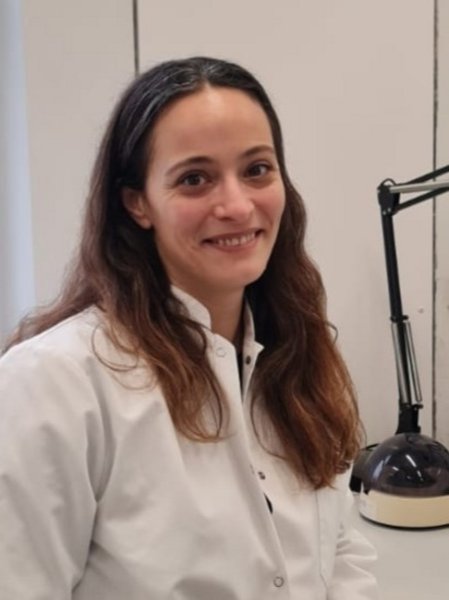
We are excited to welcome Chrysoula Dimopoulou, who recently joined the PIG-PARADIGM project as a postdoc researcher. Originally from Athens, Greece, Chrysoula has been living in Copenhagen for many years, where she completed her master’s at the University of Copenhagen and later earned her PhD at DTU. Her academic path has taken her through clinical research, molecular genetics, and microbiology, with a strong focus on the gut microbiome. Now, she brings this expertise to PIG-PARADIGM, where she will explore intestinal health in pigs.
Can you tell us a bit about your background and what led you to PIG-PARADIGM?
My background is in molecular biology, with a focus on genetics and microbiology. During my PhD, I worked on engineered probiotics and their role in the gut microbiome. Earlier, I was involved in characterizing pathogenic genetic variants linked to disease. These experiences shaped my interest in host-microbe interactions and how they influence health and disease. When I learned about PIG-PARADIGM, I felt it was a perfect match—studying intestinal health in pigs by combining genetics and microbiome data aligns closely with my scientific interests.
What is your project about?
In short, I’m investigating how gut pathogens interact with the intestinal mucosa in pigs. More specifically, I’m focusing on mucins—large glycoproteins that make up the mucosal layer—and how different strains of E. coli, a major cause of post-weaning diarrhea in piglets, bind to these mucins. I’m also exploring whether the host’s genetic background influences this binding. It’s very much lab-based work at this stage, using in vitro setups to answer these questions.
What do you hope to achieve with this research?
The ultimate goal is to understand the mechanisms behind these interactions. Later, in collaboration with the Center for Glycomics at the University of Copenhagen, we aim to identify which bacterial proteins and mucin structures are involved. This knowledge could pave the way for alternative treatments—such as using probiotics to compete with pathogenic strains—reducing the need for antimicrobials in pig production. It’s an exciting prospect that could have real-world impact.
Where are you in the process now?
I’m at the very beginning—setting up experiments and generating initial data. It’s a hands-on, day-to-day lab project, and I expect it will remain very experimental as we move forward.
Chrysoula’s enthusiasm for the project and its broader goals—such as reducing antimicrobial use in animal production—reflects the spirit of PIG-PARADIGM. We look forward to following her journey and the insights her research will bring.