The oinkcredible sowperfood - Nopal
By Shaila Ann Sigsgaard
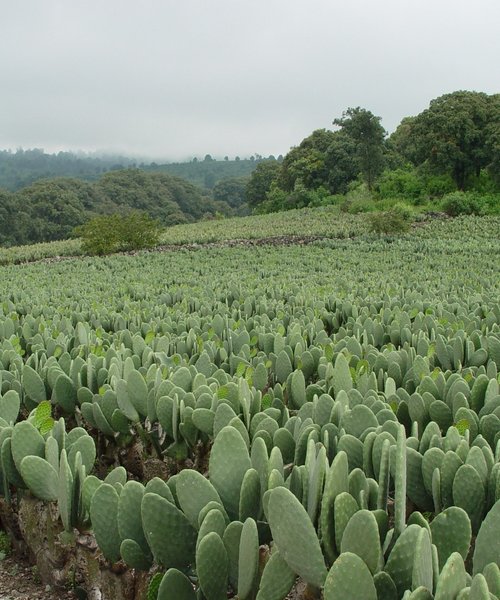
At the 2025 PIG-PARADIGM Annual Meeting in Elsinore, Denmark – we met Dr. Carolyn Slupsky who has taken a different path. Rather than focusing on the usual feed strategies, she introduced a surprising contender from arid regions: Nopal, the prickly pear cactus pad. Her suggestion? That this drought-tolerant plant might offer a new, sustainable direction for pig nutrition.
“Optimizing feed efficiency alone isn’t enough,” says Dr. Slupsky, calmly but firmly. For too long, livestock diets have been built around cheap, starch-heavy ingredients—corn, primarily—that accelerate growth but do little to nourish gut microbiota. The result? Animals whose digestive ecosystems are dominated by bacteria that specialize in breaking down simple sugars, leaving them vulnerable to infection and dependent on antibiotics.
Dr. Slupsky sees this as both a missed opportunity and a solvable problem. “Complex carbohydrates—fibers—are critical for feeding beneficial microbes,” she explains. These dietary components can reshape microbial communities, bolster immune resilience, and reduce the frequency of pathogen-related illnesses.
A desert plant with global potential
Her team’s solution began with curiosity: a Mexican graduate student introduced her to Nopal nearly eight years ago. Known in Hispanic culinary and traditional medicine circles, Nopal is packed with polyphenols and soluble fiber and grows easily in arid climates like those of Mexico, Spain, and California.
In a high-fat, high-sugar mouse model—designed to mimic metabolic syndrome—her team observed that Nopal dramatically reversed fatty liver disease. Mice fed with Nopal showed normalized blood glucose levels and a significant increase in gut microbiota diversity, suggesting that the cactus didn’t just mitigate symptoms—it actively restructured the animals’ metabolic and microbial profiles. “It just really had these positive impacts,” she recalls, “and after doing that study, I thought, boy, this is like wonderful food.” That discovery laid the groundwork for applying Nopal’s properties beyond lab rodents—ultimately pointing toward the barn.
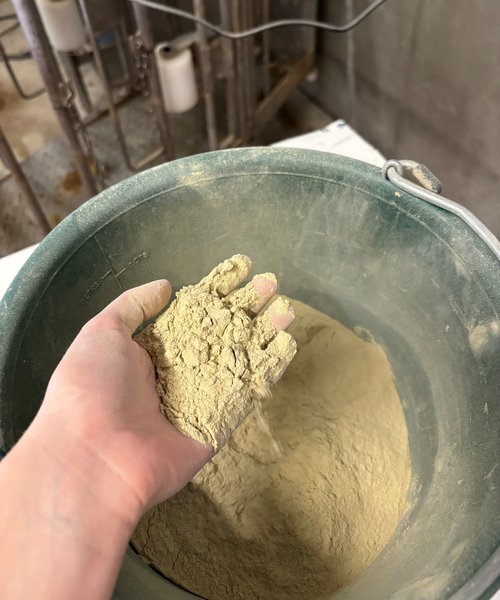
What started as a pilot project became a landmark trial. Dr. Slupsky’s team imported a ton of dried Nopal powder—roughly $1,000 worth—and mixed it into sow feed at a 5% ratio. That modest inclusion led to significant results: faster post-farrowing recovery, greater appetite, and stronger early lactation in sows. Their piglets, in turn, showed early signs of improved gut development, including greater intestinal villus length.
“We haven’t finished the microbiome sequencing yet,” she cautions, “but we’re already seeing indicators that maternal gut health translates directly into stronger offspring.”

Practical, scalable, and palatable
Nopal’s appeal isn’t just biological—it’s logistical. The powder ships dry, blends like flour, and is readily consumed by the animals. “At first, the smell is different,” she admits, “but the sows adjusted quickly. Importantly, none became obese—a real concern for sow productivity and piglet viability.”
With obesity impairing milk production and disrupting hormonal balance, the ability to support sow health without overfeeding is a crucial advantage. And unlike other niche supplements, Nopal is affordable and adaptable, scalable across systems large and small.
Challenging the feed status quo
This kind of innovation is exactly what PIG-PARADIGM was built for. The annual gathering champions outside-the-box . “This is one of the few forums where I can say 'I’m feeding cactus to pigs' and not be laughed out of the room,” she quips.
That openness matters. As the livestock sector confronts mounting pressure over antibiotic use, sustainability, and animal welfare, solutions won’t be found in repeating the same strategies. “We need to see nutrition as more than just calories and cost,” Dr. Slupsky asserts. “We need to feed the microbes, too.”
The road ahead
With growing interest across Europe—especially from producers in Spain, where Nopal can be locally sourced—the cactus supplement may soon move from curiosity to common practice. It won’t replace traditional feed ingredients, but it doesn’t need to. A 5% inclusion, Dr. Slupsky argues, is enough to shift outcomes in meaningful ways.
And it all started with a student, a cactus, and a researcher willing to rethink the rules.