Beyond antibiotics: How antioxidants may hold the key to healthier pigs
By Shaila Ann Sigsgaard
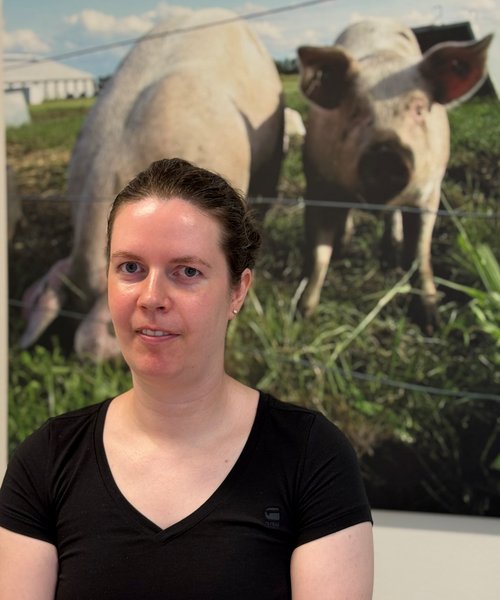
At Aarhus University, PhD student Pernille Aagaard Madsen is investigating a pressing challenge at the intersection of animal nutrition, immunology, and sustainable farming: how to fortify pigs against enteric infections without relying on antibiotics. Her research - part of the PIG-PARADIGM sub-project NRT3.1 - focuses on identifying oxidative stress markers that arise during bacterial infections and exploring antioxidant interventions that could potentially buffer the impact of post-weaning diarrhea (PWD).
Oxidative stress is a cellular imbalance caused by an excess of reactive oxygen species (ROS), which can damage lipids, proteins, and DNA. In piglets, this stress has been shown to disrupt intestinal barrier function, increasing their vulnerability to infection. Madsen’s research takes a closer look at how antioxidant-rich diets can mitigate this risk.
Her project includes three complementary studies:
- Studies 1 and 3 focused on gut health during E. coli challenges. Piglets were administered antioxidant compounds such as hemp oil, fish oil, selenium, vitamin C, and a Novonesis antioxidant blend to observe whether oxidative stress could be reduced during infection.
- Study 2 shifted the lens to the bloodstream. Using a catheter-based method, pigs were injected with LPS—a bacterial lipopolysaccharide that induces acute inflammation. The goal was to analyze oxidative stress markers and cytokine responses following an LPS challenge.
One especially noteworthy outcome came from study 2, where the marker for lipid peroxidation (MDA) spiked before inflammatory cytokines appeared. This suggests oxidative stress may precede the immune response, which could be crucial for early intervention strategies. Blood samples taken at multiple intervals confirmed that oxidative stress starts setting in at the very onset of inflammation.
Additional findings from the E. coli trials reinforced the potential of targeted antioxidant therapy:
- Pigs given selenium and vitamin C experienced a delayed onset of diarrhea.
- Supplementing vitamin E with fish or hemp oil resulted in lower fecal scores and boosted antioxidant enzyme activity (SOD), which helps neutralize damaging free radicals.
- Despite higher E. coli counts in some cases, pigs receiving hemp oil and vitamin E showed no signs of diarrhea—suggesting that antioxidant status may be more crucial than bacterial load.
In evaluating biological samples for diagnostic purposes, the study found that while serum is reliable for cytokine measurements, saliva showed surprising potential—particularly for detecting IL-1α in response to LPS infusion. Though saliva’s performance was mixed, it might offer a non-invasive alternative for certain biomarkers.
Beyond its immediate scientific value, Madsen’s research has implications for global health. With antimicrobial resistance (AMR) on the rise and agricultural antibiotics under scrutiny, alternatives like antioxidant-based nutrition could offer a viable path forward. Her work hints at practical feeding solutions that enhance gut resilience in piglets, potentially reducing reliance on antibiotics while promoting animal welfare.
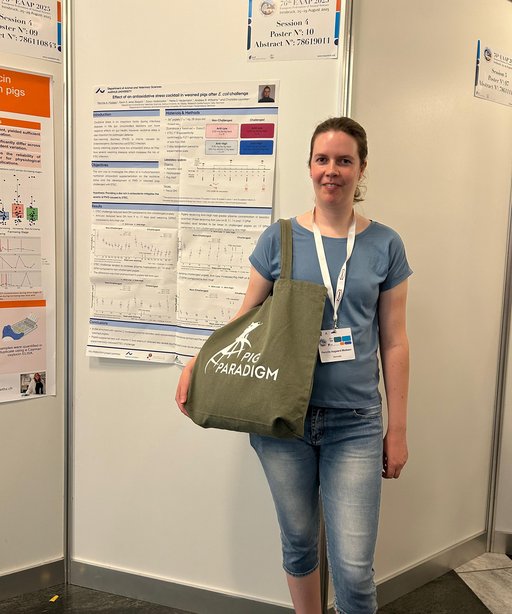
What has been the most valuable learning experience for you during your time in PIG-PARADIGM?
One of the most valuable learning experiences during my time in PIG-PARADIGM has been the opportunity to work within a multidisciplinary and international research consortium. Collaborating with experts in immunology and animal nutrition has broadened my understanding of the complex interactions underlying post-weaning diarrhea in pigs. In particular, I have gained substantial insights into how oxidative stress modulates intestinal health and contributes to disease susceptibility in pigs. This experience has also enhanced my ability to critically interpret data across different experimental systems and improved my scientific communication skills through joint meetings and collaborative outputs.
If you had more time in PIG-PARADIGM, is there any area of your research or collaboration you would have liked to explore further?
If I had more time in PIG-PARADIGM, I would have liked to explore more deeply the impact of oxidative stress on the gut microbiota during the post-weaning period. While my current work has focused on host oxidative responses mainly in blood and intestinal tissue samples, further investigation into how oxidative stress shapes microbial composition and function—particularly in relation to pathogenic overgrowth and loss of beneficial taxa—would strengthen our understanding of disease susceptibility. Integrating microbiome analyses with oxidative biomarkers could provide a more comprehensive view of host-microbe interactions and support the development of more targeted intervention strategies.
From a scientific perspective, which part of your research do you see as a key steppingstone for future research?
I think that a key scientific steppingstone from my research is the identification of oxidative stress as a potential driver, rather than merely a by-product, of inflammation upon acute inflammation such as that observed during LPS infusion in blood. This distinction highlights the importance of developing targeted nutritional strategies that focus specifically on reactive oxygen species (ROS) modulation. In this context, the provision of antioxidants such as vitamin E and vitamin C appears to have a beneficial effect on the prevalence of post-weaning diarrhea in pigs. Future research could build on these findings by mapping the temporal dynamics of oxidative and inflammatory responses and evaluating the efficacy of compounds with selective ROS-scavenging activity. Such an approach may support the design of more precise, mechanism-based interventions to improve piglet health during weaning.
Which aspect of your research do you believe holds the most promise for real-world impact - for example, improving practices for farmers or veterinarians, or reducing antimicrobial use in pig production?
I think that the aspect of my research that holds the most promise for real-world impact is the use of antioxidant supplementation—specifically vitamin E and vitamin C—to enhance the antioxidant status of piglets. Administering these compounds during the suckling period may help establish a stronger antioxidant status prior to weaning, a time when piglets are particularly vulnerable to oxidative stress and infection.
By improving the piglets' resilience, this approach could potentially reduce the severity of post-weaning diarrhea and, consequently, decrease the reliance on antimicrobial treatments. Such preventive strategies are of practical relevance to both farmers and veterinarians, as they align with current efforts to improve animal health and reduce antimicrobial use in pig production.
What do you feel you gained from being part of a large, interdisciplinary, and cross-institutional project like PIG-PARADIGM?
Being part of the PIG-PARADIGM project has provided me with valuable experience in interdisciplinary collaboration and scientific integration. Working alongside researchers from diverse fields—such as immunology and nutrition has deepened my understanding of the multifactorial nature of post-weaning diarrhea. This environment encouraged the exchange of knowledge across disciplines and institutions, which not only strengthened the scientific quality of my own work but also enhanced my ability to communicate and collaborate effectively in complex research settings. Moreover, the exposure to different methodological approaches and perspectives has broadened my research skills and informed me of a more holistic view of animal health challenges.
What are your next steps, and how do you hope to apply what you’ve learned from PIG-PARADIGM?
I will continue working as a research assistant for three months while finalizing my PhD thesis, which I plan to submit on the 28th of July. Over the coming months, I intend to further analyze samples collected during the PIG-PARADIGM project. Specifically, I plan to focus on assessing antioxidant enzyme activity in digesta samples and continue work on metagenomic data derived from DNA extractions performed during my PhD. While the sequencing is complete, the bioinformatic analysis remains to be done, and I plan to focus on this next. I think that the interdisciplinary training and collaborative experience gained through PIG-PARADIGM have equipped me with skills to pursue this work and contribute to a deeper understanding of oxidative stress and microbiota interactions in piglets.