Article, SUBNORDICA at COP31
SUBNORDICA: The challenges of ethical, net zero development of the world’s coastal shelves
Authors: Katrine Juul Andresen, Peter Moe Astrup, Vincent Gaffney, and Svea Mahlstedt
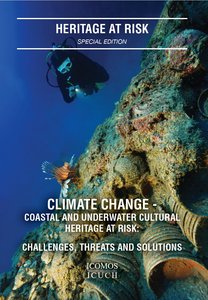
The SUBNORDICA PI-group has published a non-technical paper about SUBNORDICA in the Heritage at Risk, special edition book prepared by the International Committee on Underwater Cultural Heritage for the COP31 meeting in Turkey November 2026.
Abstract: The need to mitigate against damage to inundated prehistoric landscapes, as a result of net zero development of the world’s coastal shelves, is amongst the most unique climate challenges faced by underwater cultural heritage. These largely unexplored landscapes previously extended over millions of square kilometres and are known to preserve unique environmental and palaeoclimatic archives. The archaeological evidence that we believe to be preserved in these areas also has the potential to transform our understanding of human settlement during historic periods of dramatic, climate change.
Today, following anthropogenic climate change, many areas marked for green energy development align with inundated, prehistoric landscapes. It is notable, however, that the difficulty of working in such environments has resulted in an almost total absence of known archaeological sites across these vast areas. Development, therefore, is occurring without the benefit of information that can inform appropriate mitigation strategies.
In response to this situation, the ERC has funded SUBNORDICA, one of the largest academic projects dedicated to the study of marine palaeolandscapes. Subnordica aims to develop new methods for exploring the undocumented palaeolandscapes of NW Europe in the face of climate-linked, coastal shelf development. Centred in the southern North Sea and the Baltic, the project is using artificial intelligence and simulation to integrate legacy and new data sets to identify areas of archaeological potential. The project aims to provide a world-leading model for the investigation of submerged landscapes, and support improved policy guidance for underwater cultural heritage management.
Read more here