
"Free Quantum Computing" by Robin Kaarsgaard Sales (SDU)
Associate Professor Robin Kaarsgaard Sales (University of Southern Denmark) presents a free model of quantum computing that replaces continuous postulates with discrete equations and linear algebra with category theory. The approach isolates quantum advantage and enables combinatorial optimisation, automated verification, and reasoning about quantum programs.
Info about event
Time
Location
iNANO Aud. (1593-012)
Organizer
QUBITS seminar format
The seminar consists of a 45-minute talk followed by refreshments and informal discussions.
Registration is not required. However, if you would like to receive future QUBITS Seminar invitations directly by email, please sign up here.
RECORDING: This talk will be recorded, but will not be live-streamed. The audience will not be visible in the recording. By attending, you acknowledge that your voice may be captured during the Q&A.
The recording will be shared as part of DIREC’s Quantum Computing seminar series via DIREC’s and QCA’s communication channels. We will also post a link here when it becomes available.
About the talk
Quantum computing improves substantially on known classical algorithms for various important problems, but the nature of the relationship between quantum and classical computing is not yet fully understood. This relationship can be clarified by free models, that add to classical computing just enough physical principles to represent quantum computing and no more. In this talk, I will describe an axiomatisation of quantum computing that replaces the standard continuous postulates with a small number of discrete equations, as well as a free model that replaces the standard linear-algebraic model with a category-theoretical one.
The axioms and model are based on reversible classical computing, isolate quantum advantage in the ability to take certain well-behaved square roots, and link to various quantum computing hardware platforms. This approach allows combinatorial optimisation, including brute force computer search, to optimise quantum computations. The free model may be interpreted as a programming language for quantum computers, that has the same expressivity and computational universality as the standard model, but additionally allows automated verification and reasoning.
About the speaker
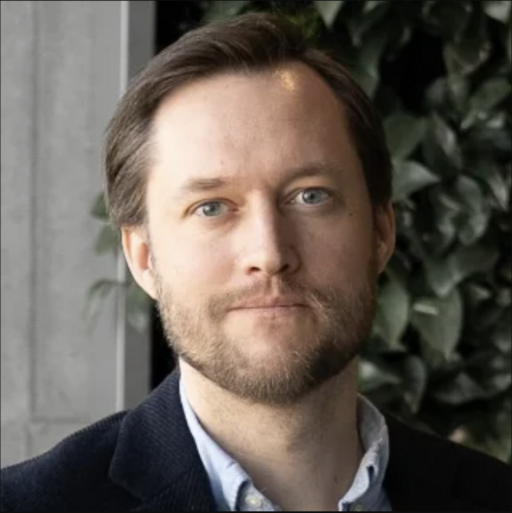
Robin Kaarsgaard is associate professor of computer science at the University of Southern Denmark, where he works on quantum foundations and on developing the programming languages that will power future large-scale quantum computers. He is principal investigator of the DFF: Sapere Aude project “FunQ: Quantum Programming Beyond the Circuit Model,” and associated with the Centre for Quantum Mathematics and Centre for Formal Methods and Future Computing. Before accepting a position at the University of Southern Denmark, Kaarsgaard held positions at the University of Edinburgh and the University of Copenhagen, where he also received his PhD.
STAY UPDATED!
Don’t miss out on upcoming QUBITS Seminars and other news from Quantum Campus Aarhus. Sign up for updates via our mailing list here:
👉 https://projects.au.dk/quantum/sign-up
You can unsubscribe at any time.