Aarhus University logo
RNA nanotechnology aims to use RNA as a programmable material to create self-assembling nanodevices for application in medicine and synthetic biology. The main challenge is to develop advanced RNA robotic devices that both sense, compute, and actuate to obtain enhanced control over molecular processes. Here, we use the RNA origami method to prototype an RNA robotic device, named the “Traptamer,” that mechanically traps the fluorescent aptamer, iSpinach. The Traptamer is shown to sense two RNA…
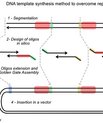
Gene synthesis efficiency has greatly improved in recent years but is limited when it comes to repetitive sequences, which results in synthesis failure or delays by DNA synthesis vendors. This represents a major obstacle for the development of synthetic biology since repetitive elements are increasingly being used in the design of genetic circuits and design of biomolecular nanostructures. Here, we describe a method for the assembly of small synthetic genes with repetitive elements: First, a…
Access to therapeutic strategies that counter cellular stress induced by reactive oxygen species (ROS) is an important, long-standing challenge. Here, the assembly of antioxidant artificial cells is based on alginate hydrogels equipped with non-native catalysts, namely platinum nanoparticles and an EUK compound. These artificial cells are able to preserve the viability and lower the intracellular ROS levels of challenged hepatic cells by removing peroxides from the extracellular environment.…
Artificial cells are engineered units with cell-like functions for different purposes including acting as supportive elements for mammalian cells. Artificial cells with minimal liver-like function are made of alginate and equipped with metalloporphyrins that mimic the enzyme activity of a member of the cytochrome P450 family namely CYP1A2. The artificial cells are employed to enhance the dealkylation activity within 3D bioprinted structures composed of HepG2 cells and these artificial cells.…
The RNA world hypothesis posits that RNA self-replication played a foundational role at the origin of life. To explore this hypothesis, researchers have used selection methods to discover RNA catalysts (ribozymes) with polymerase activity. Some such polymerase ribozymes can replicate parts of their own sequence but little about their three-dimensional structures was known. Here, we describe the determination of the structure of one such polymerase ribozyme using cryo-EM and map its functional…
Page 5 of 6
Sort by: Date | Author | Title
Displaying results 3121 to 3130 out of 3471
Previous
309
310
311
312
313
314
315
316
317
318
Next