Obafemi Awolowo University (OAU), Ife, Nigeria

Dr. Femi Awosanmi femiawosanmi@oauife.edu.ng
Dr. Femi Emmanuel Awosanmi holds a Bachelors of Technology (Honours) in Agronomy, Masters in Seed Science and a Ph.D. in Seed Science and Technology. He is a Senior Lecturer in the Department of Crop Production and Protection, Faculty of Agriculture, Obafemi Awolowo University (OAU), Ile-Ife, Nigeria. His research interests entail seed production potential, seed quality development, physiological maturity and storage potential of major crops and underutilized species with reference to climate change and food security. Having previously worked as an Agricultural Extension Officer, he had participated in and facilitated many training courses for farmers, seed analysts and local seed business groups in Nigeria. He served as a resource person in training Seed Analysts from the National Agricultural Seeds Council in 2008; and the CORAF/WECARD (West and Central African Council for Agricultural Research and Development)-sponsored Training of seed officers (from 8 WCA countries- Benin, Burkina Faso, Gambia, Ghana, Mali, Niger, Nigeria, Senegal) on the Production of High Quality Maize Seeds in 2015. He was a Visiting Scientist at the Department of Agricultural and Environmental Biotechnology, Faculty of Agrarian and Veterinary Sciences, Sao Paulo State University, Jaboticabal, Brazil.
He is currently the Public Relations Officer (PRO) of the Association of Seed Scientists of Nigeria; and a member of Sustainable Futures Global Network, International Herbage Seed Group, CONNECTED Network Team, International Society for Development and Sustainability (ISDS) and International Society for Seed Science (ISSS). He has supervised many undergraduate and postgraduate students in Seed Science and Technology at the Obafemi Awolowo University, Ile-Ife, Nigeria.

Prof. Abimbola Oluwaranti boluwaranti@oauife.edu.ng
Abimbola Oluwaranti is a Professor of Plant Breeding and Genetics in the Department of Crop Production and Protection, Faculty of Agriculture, Obafemi Awolowo University (OAU), Nigeria. She obtained B. Agric (Plant Science), M.Sc. and Ph.D (Plant Science) with Speciality in Plant Breeding and Genetics from the Department of Plant Science, OAU in 1998, 2005 and 2011 respectively. She was appointed as Assistant Lecturer in Plant Breeding and Genetics of the Department of Crop Production and Protection, OAU on April 1, 2009 and rose to the rank of full Professor in 2021. She is a member of several professional organizations among which are: Genetics Society of Nigeria (GSN); Organization for Women in Science for the Developing World (OWSD) (Formerly TWOWS); American Society of Agronomy (ASA); Crop Science Society of America (CSSA); Association of Seed Scientists of Nigeria (ASSN); African Plant Breeders Association; Nigerian Plant Breeders Association and Society for Climate Action in Nigeria.
National Horticultural Research Institute, Ibadan, Nigeria
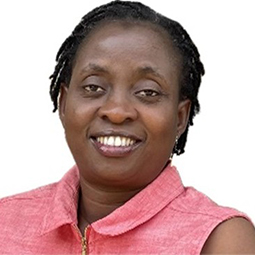
Dr. Dorcas Ibitoye bunmiajisafe@yahoo.com
Dr. Dorcas Olubunmi Ibitoye is a distinguished plant breeder with about two decades of professional experience in plant breeding, molecular breeding design, and pre-breeding of germplasm resources for sustainable conservation and utilization. She combines technical expertise with proven leadership in participatory and demand-driven breeding.
Currently serving as Director of Research at the National Horticultural Research Institute (NIHORT), Dr. Ibitoye has demonstrated remarkable grantsmanship, securing international grants that have supported critical infrastructure and research capacity building, including modern screenhouses, LPG-5 centrifugal spray dryer liquid to powder machine, laboratory equipment and farmer-oriented innovations.
Her professional excellence has earned her several awards and recognitions, including the Most Influential Scientist Award (NIHORT, 2019) and an Outstanding Service Award as President for the International Association of Research Scholars and Fellowship (IARSAF-IITA, 2014). She is a Fellow of the Africa Plant Breeding Academy (UC-Davis) and African Women in Agricultural Research and Development (AWARD). In addition to her research achievements, Dr. Ibitoye has been an outstanding mentor and leader. She has supervised/co-supervised numerous graduate students and she mentors younger scientists through facilitation of different capacity development programs.
She is happily married and blessed with lovely daughters.
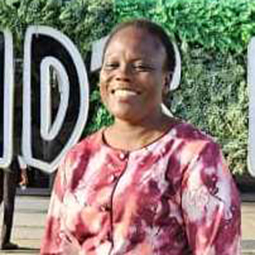
Dr. Rebecca Ibe beckkyibe2015@gmail.com
Dr Rebecca Bolatito Ibe holds B.Agric., MSc. and PhD degrees in Agricultural Economics with 20 years research experience. She is currently Assistant Director, Research at the National Horticultural Research Institute, Ibadan, Nigeria. Her burning passion has been to contribute meaningfully to sustainable economic development and to achieve this, she has led several researches and also collaborated with other change agents to design and execute solution-driven research. Her research involves the dissemination of improved, cost-effective and eco-friendly horticultural crops, marketing and utilization techniques, capacity building and impact assessment. She is a member of the International Society for Horticultural Science (ISHS), Horticultural Society of Nigeria (HORTSON), Organization of Women in Science and Development (OWSD). She has authored and co-authored research articles in reputable journals and proceedings and was conferred with the award of the Fellow of the HORTSON (FHSN) on 3rd November 2025.
National Agricultural Seeds Council, Abuja, Nigeria

Dr. Babafemi Olisa zionolisa3@gmail.com
Dr. Babafemi Sunday Olisa is a researcher dedicated to advancing seed quality, utilization, and agricultural productivity. Focusing on seed systems, seed quality assurance and seed testing; his work drives practical, evidence-based recommendations that directly benefit farmers. He works at National Agricultural Seeds Council (NASC), Nigeria as the Quality Assurance Manager / Head of the Central Seeds Testing Laboratory. He research crisscross seed system survey, seed biology: seed science & technology; seed pathology, crop productivity and climate resilience-agriculture. He conducts applied scientific research to address seed quality problems related seed and crop productivity. His work include developing advanced laboratory protocols and agricultural research methodologies to improve seed quality assurance and crop productivity. He has championed the use of advanced testing methods that go beyond basic germination and purity tests. His extensive experience covers the production of food security agricultural crops: legumes, cereal, vegetable, forage and underutilized crops. In a landmark achievement, he facilitated the International Seed Testing Association (ISTA) accreditation for a laboratory. He has been instrumental in training quality control officers from private seed companies, public institutions; research institutes across Nigeria and other African countries. Dr. Olisa's research provides critical recommendations that inform and guide national policies related to seed production, quality assurance and food security. He has provided technical support to international and national organizations, including the International Fund for Agricultural Development Value Chain Programme (IFAD-VCDP), the Food and Agriculture Organization of the United Nations (FAO), and the Federal Ministry of Agriculture and Food Security (FMAFS). His contributions cover seed quality assurance, climate-resilient agriculture, and institutional capacity strengthening.
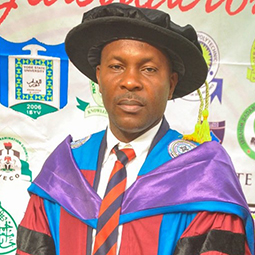
Dr. Akan Uteh akanuteh.au@gmail.com
Dr. Akaninyene Sunday Uteh is an accomplished agricultural economist and development professional with over 15 years of experience in strategic planning, monitoring and evaluation (M&E), seed system development, and agricultural policy implementation. He currently serves as the Acting. Director, Seed Information, Data Management and Capacity Building Department at the National Agricultural Seeds Council (NASC), Nigeria, where he leads the Annual National Seed System Surveys and other national assessments that inform evidence-based seed sector planning. Dr. Uteh is Nigeria’s Survey Manager for the IMAGE Program (Wave 2), a five-year Bill & Melinda Gates Foundation initiative advancing the integration of DNA-based tools into routine crop variety monitoring. He has provided consultancy and technical support to USAID, IFAD, FAO, AGRA, DANIDA, FMARD, and IITA in areas such as seed quality assurance, food balance sheet analysis, climate-resilient agriculture, and institutional capacity strengthening. Passionate about innovation and data-driven agricultural transformation, Dr. Uteh is committed to strengthening institutions and improving seed and food systems across Africa.
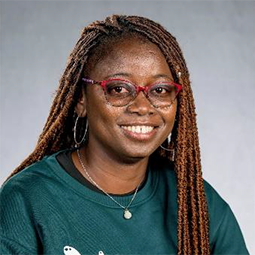
Dr. Temitope Olasunkanmi temitopechristy18@gmail.com
Temitope Christy Olasunkanmi is a researcher and seed systems professional with over a decade of experience in crop improvement, seed quality regulation, and variety protection in Nigeria. She holds an M.Sc. in Plant Breeding from Ahmadu Bello University and a B.Sc. in Plant Breeding and Seed Technology from the Federal University of Agriculture, Abeokuta.
She currently serves as a Principal Agric Officer at the National Agricultural Seeds Council (NASC), where she leads Distinctness, Uniformity, and Stability (DUS) field activities and coordinates national survey teams for the IMAGE genotyping-based crop variety adoption project. Her leadership has supported large-scale seed testing, national field inspections, and the development of institutional capacity.
Temitope previously served as Senior Agric Officer, where she led multi-location evaluation of more than 45 soybean lines across 22 sites, established Nigeria’s first national crop descriptor fields, and contributed to drafting the country’s Plant Variety Protection (PVP) Law. She has managed laboratory analysis of over 8,000 seed samples, supervised DUS and screenhouse trials, and trained more than 100 interns and NYSC members. She has also been involved in various international projects.
Her expertise spans molecular diagnostics, DUS field trial management, statistical analysis, and seed policy. She is active in professional associations and volunteers to teach disadvantaged students in her community.
Abiola Ajimobi Technical University, Ibadan, Nigeria
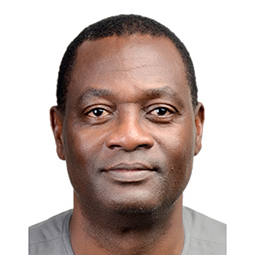
Prof. Adesola Ajayi adesola.ajayi@tech-u.edu.ng
Prof. Adesola Ajayi is the Vice-Chancellor of Abiola Ajimobi Technical University in Ibadan, Nigeria and Professor of Crop Science. He is an acknowledged research leader with extensive research and industry experience on seed systems, agricultural innovations and enterprise development, climate change impacts, value chain analysis, research management, and agricultural policy dialogue.
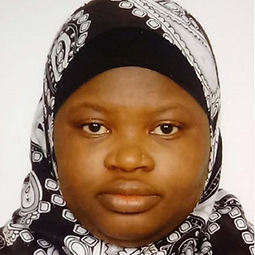
Dr. Adebimpe Nafisat Adedeji-Badmus adebimpe.adedeji@tech-u.edu.ng
Dr. Adebimpe Nafisat Adedeji-Badmus is a lecturer in plant biotechnology at the Department of Microbiology and Biotechnology, Abiola Ajimobi Technical University, Ibadan. Her research interests focus on locally-adapted, climate-resilient, underutilized crops; aiming at improving seed quality, developing improved varieties and enhancing production of these crops. Her specialities include seed biology/physiology, seed biotechnology, horticultural crop biotechnology and mutational breeding. She earned her Ph.D. from the prestigious Technical University of Munich in Germany, where she focused on developing protocols for genetic improvement of Crassocephalum crepidioides and C. rubens, two economically important underutilized crops in Nigeria. She is a dedicated researcher and her dedication have earned her the German Academic Exchange Service (DAAD) scholarship, awarded for her doctoral studies. She has co-authored articles published in the Frontiers in Plant Science, contributing valuable insights to the understanding of seed dormancy and germination mechanisms in Crassocephalum. Dr. Adedeji-Badmus is a passionate educator, deeply committed to imparting useful knowledge and fostering critical thinking among her students. She has successfully mentored numerous students through their academic programmes. She is an active member of the International Society of Seed Science.
International Institute of Tropical Agriculture (IITA), Ibadan, Nigeria
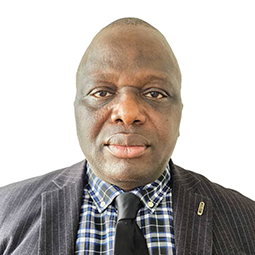
Dr. Olaniyi Oyatomi o.oyatomi@cgiar.org
Dr. Olaniyi Oyatomi is a Post-doctoral Fellow in Genetic Resources at the Genetic Resources Center (GRC) of the International Institute of Tropical Agriculture (IITA) in Ibadan, Nigeria. He joined IITA in 2001 as a research supervisor. He later became the Seed Bank Manager at the Genetic Resources Center in 2010, a position he held until 2022, when he became a Post-doctoral Fellow in Genetic Resources. His work has focused on the core elements of Seed Quality Management, germplasm conservation, and pre-breeding of legumes, including cowpea, soybean, Bambara groundnut, African yam bean, and other underutilized legumes.
Aarhus University, Slagelse, Denmark
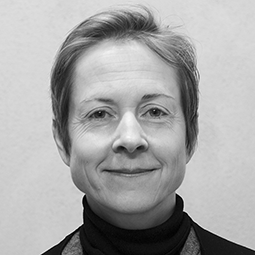
Dr. Fiona Hay fiona.hay@agro.au.dk
Dr. Fiona Hay has been working in seed research for >30 years, having started as a student in the Seed Conservation Department – later the Millennium Seed Bank – at the Royal Botanic Gardens Kew. She later moved to the T.T. Chang Genetic Resources Center at the International Rice Research Institute in the Philippines. Since 2018, she has been working at Aarhus University in Denmark and still collaborates with the international genebanks of the CGIAR. Her research has in particular focused on seed longevity: understanding when to harvest seeds, how to dry them for optimum longevity, and inter- and intra-species variation in seed longevity. She is chief editor of Seed Science and Technology and President of the International Society for Seed Science.

Dr. Asma Moeinzadeh asmamoein@agro.au.dk
Asma is a Postdoctoral Researcher at Aarhus University working on seed longevity, viability assessment, and the development of image-based technologies for genetic resource management. Her work focuses on accelerating and improving seed quality evaluation using multispectral imaging, and predictive modelling. She has collaborated with international partners, including the Rural Development Administration of Korea, on projects involving seed aging experiments and viability prediction in crop species. Asma is particularly interested in developing scalable, data-driven tools that support sustainable agriculture and the conservation of plant genetic resources.

