
CRIES seminar: From Work Packages to Collective Voice
Over three days in Aarhus, the CRIES project gathered for a seminar focused on synthesis: preparing our joint monograph, developing a planned special issue, clarifying practicalities of data, and discussing what the next phase of the project should look like.

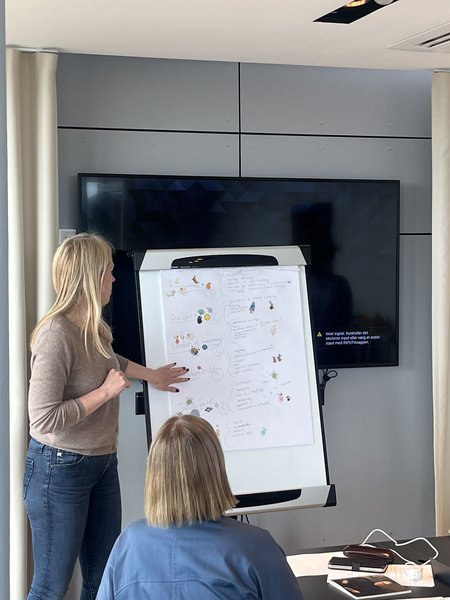
Over three days in Aarhus, the CRIES project gathered for a seminar focused on synthesis: preparing our joint monograph, developing a special issue, clarifying data practicalities, and discussing what the next phase of the project should look like. The seminar really clarified the shift from separate work-package trajectories toward a more collective articulation of what CRIES is becoming.
Across different historical, cultural, and political contexts, we discussed how song can organise memory, stage belonging, rehearse conflict, carry inherited forms, and make social relations audible.
The monograph workshop was organised in an unconference-inspired format, where we generated and clustered possible themes from the group’s own materials and concerns. Some of the strongest recurring concepts were:
resilience: song as empowerment, coping strategy, cultural continuity, and heritage for resistance;
diaspora: singing as a practice of belonging, integration, migration, and cultural memory;
the burden of remembering: including nationalism, nostalgia, trauma, emotional labour, embodiment, and ambivalence;
management: the institutional, logistical, aesthetic, and informal structures that shape singing practices;
Janus face: song as both connective and ambivalent, shaped by cultural, temporal, spatial, and archival dimensions;
crisis: not only as an event, but also as a social, environmental, personal, and historical condition.
One of the most productive outcomes was the recognition that collective singing cannot be treated only as a positive or cohesive force. It may create solidarity, but it may also produce pressure, exclusion, certain nostalgia, political intensification, or a sense of false community. That tension will be central to the monograph.
The seminar gave us a clearer sense of the kind of book CRIES should become: not simply a collection of case studies, but a shared argument about singing, crisis, memory, community, and the social life of voice across Scandinavian and Baltic contexts.
Many thanks to the CRIES team for three generous and intellectually focused days in Aarhus, and for the work of turning scattered cases, concepts, and materials into a collective research contribution.